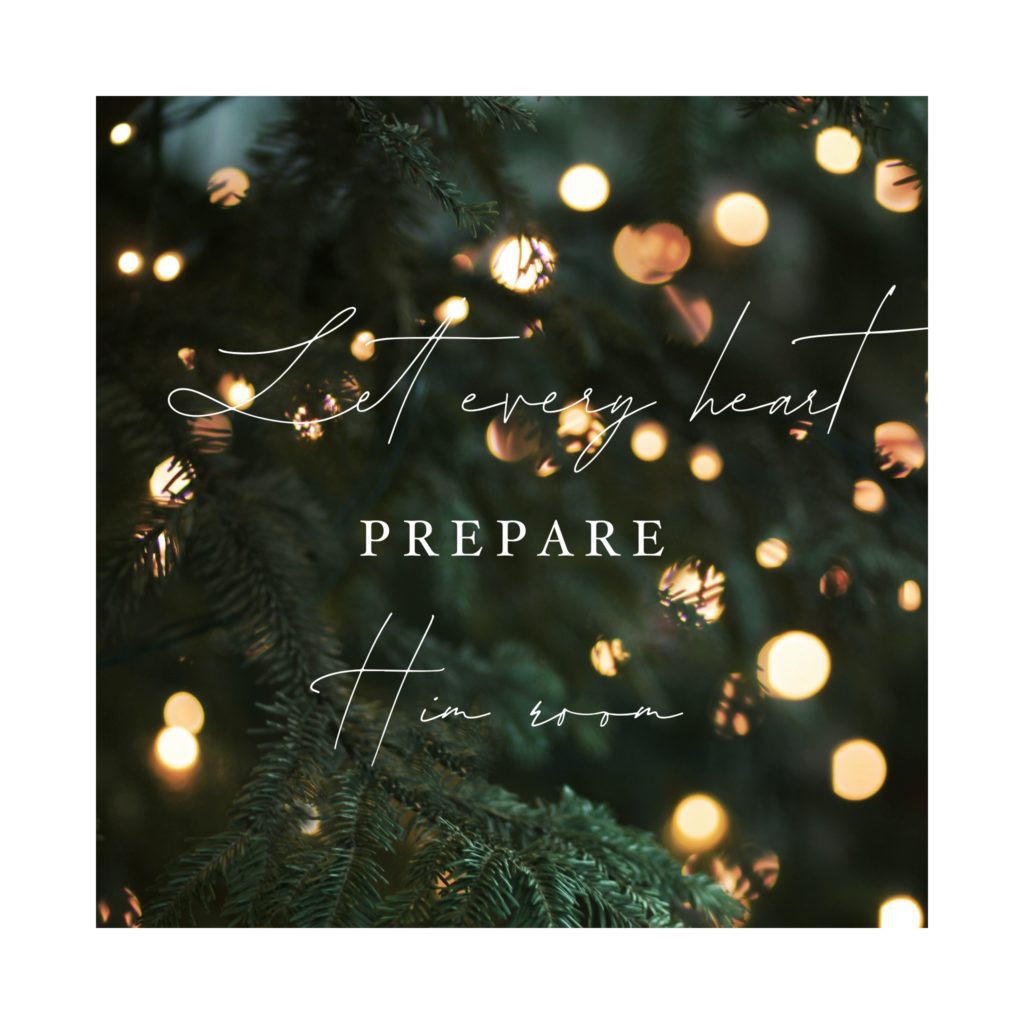
If I could boil down the message of advent, it’s this: let every heart prepare Him room.
Or, “Let ev’ry hea-art pre-pa-are Hi-im roo-oom,” as the lyrics read in the Christmas carol “Joy to the World” by English minister Isaac Watts. Except it’s actually not a Christmas song.
It’s his paraphrase of Psalm 98:4–9, lifted from his book ‘Psalms of David Imitated in the Language of the New Testament’ that he penned in 1719. In it, he rewrote the psalms as poems and looked for ways they pointed to the New Testament—and ultimately to Jesus. He named Psalm 98 “Messiah’s Coming and Kingdom.” Over the years and across the Atlantic, it became the Christmas tune we love today.
Some lines undoubtedly sound Christmassy, though: “the Lord is come” reminds us of Jesus’ birth, and “prepare Him room” reminds us that no room was prepared at the inn. And that theme of preparation carries through both Testaments and makes all the difference for how we celebrate Christmas—and how we live the rest of our lives.
Every New Testament gospel has the phrase “prepare the way of the Lord” in its opening chapters. It’s the message of Jesus’ cousin, who announces that Heaven is about to touch Earth and what people should do about it: repent and experience forgiveness. In other words, people must prepare for Jesus. It’s a quote from 700 years earlier, when the prophet Isaiah paints a picture of what preparation looks like: “Let every valley be lifted up, and every mountain and hill be made low; and let the uneven ground become a plain, and the rugged terrain a broad valley; then the glory of the Lord will be revealed, and all flesh will see it together; for the mouth of the Lord has spoken” (Isaiah 40:3–5, NASB).
The Hebrew word for ‘prepare’ in Isaiah 40:3 is used in the sense of spiritual revival—of turning or returning to God—and the descriptions of nature are imagery for what needs to happen internally. It’s about getting obstacles out of the way.
One obstacle to preparing for Christmas — and faith overall — is the lack of wonder. In my conversations with friends this Christmas season about losing the wonder, we’ve explored a combination of elements: post-pandemic life turned mid-pandemic again, a Missouri winter that’s not actually cold yet, or knowing that many of our friends have lost family members this holiday season. While all wonder is not lost, I’ve asked myself what experience will bring it back. But maybe that’s not the right question.
The search for wonder is more active than passive. And one word in “Joy to the World” and Isaiah 40:3–5 shows us how to prepare for this wonder: let.
“LET ev’ry heart prepare Him room,” “LET every valley be lifted up,” “LET the uneven ground become a plain” — these aren’t using ‘let’ the way we do today. To us, ‘let’ means to permit or allow, but in older British English, it’s used in command—so it’s the start of an imperative sentence. It has the same ‘command’ meaning as “clean your room,” “clock out at work,” or “wrap the Christmas presents before Christmas Day” (which I still have to do…). “Let” is used this way in the Bible’s languages (Hebrew + Greek), too. As an example, just one read through the Book of Hebrews shows you it’s stocked full of words translated as “let us” statements (hold the vegetable jokes, please) that are actually commands—though invitingly so: let us draw near to God. Let us hold unswervingly to the hope we profess. Let us throw off what hinders us. Let us fix our eyes on Jesus.
Understanding ‘let’ as a command changes the way we understand how to prepare for Christmas joy, doesn’t it? Letting the wonder of the Christmas season wash over you has little to do with seeing it through the eyes of a child, losing your voice in a chorus of Christmas carols, or pining for a snowy winter wonderland. It’s far more participatory than that. It’s a shift in the object of our wonder from Western Christmas culture to the Word made flesh. Jesus has come—so we have some getting ready to do.
Letting every heart prepare Him room isn’t about being allowed to give Jesus some extra space. It’s about participating in a life that joins heaven and earth. He reaches down and we reach back up.
Letting every heart prepare Him room is an intensely personal invitation for God to toil with us on the rocky ground of our disappointments and disbelief as He smooths the rugged terrain into a broad valley with more room for Him to move. It’s asking God to partner with us in raising up the valleys of depression and anxiety. Let our hearts prepare Him room, with all the gritty, earthy unearthing of our worst fears and deepest hopes. THEN the glory of the Lord will be revealed, and all flesh—including yours—will see it together (Isaiah 40:5).
It’s Christmas Eve, yes, but there’s still time to let your heart prepare Him room. The wonder awaits you. Heaven met earth some 2,000 years ago and is still meeting it every time you say yes to this participatory life.